Published · FX Route team
Japan has become much more card-friendly, but it is still a country where some cash goes a long way. The key question is less where to exchange and more how to split your spending between cards and cash.
At a glance
| Item | Details |
|---|---|
| Currency | Japanese yen (JPY). Coins: 1, 5, 10, 50, 100, 500 yen. Notes: 1,000, 5,000, 10,000 yen |
| Cost to buy at home | Usually low in most countries, since the yen is a major currency |
| Card acceptance | Most chains and city shops; some small restaurants and rural areas are cash-only |
| Suggested mix | Mostly a low-fee card + some cash + an IC transit card |
| Double exchange | Not needed |
How much cash do you need?
According to figures released by Japan's Ministry of Economy, Trade and Industry in March 2026, cashless payments made up 46.3% of consumer spending in 2025 on the long-running measure, or 58.0% on a new domestic measure, with credit cards accounting for most of it. In other words, cards work in many places, but a large share of payments is still cash.
Ticket machines at ramen shops, older izakaya, shrine and temple fees, rural buses and small neighborhood shops can still be cash-only. For a city trip, a modest daily cash budget is usually enough; bring more for countryside or hot-spring towns.
Where to get yen
- Order from your bank before you go if your bank offers online discounts. This is usually cheaper than exchanging on arrival.
- Use a travel or multi-currency card with free yen conversion for both card payments and ATM withdrawals.
- Exchanging in Japan is possible at airports and city counters, but rates are usually less favorable than ordering ahead at home.
Using ATMs in Japan
Convenience store ATMs make it easy to top up cash. Seven Bank ATMs in 7-Eleven stores and Japan Post Bank ATMs are the best-known machines that accept foreign-issued cards. Hours and operator fees can vary, so read the screen before confirming.
- Most machines offer an English menu.
- If asked whether to convert into your home currency, choose yen.
- If a fee applies per withdrawal, take out what you need in one go.
IC transit cards and coins
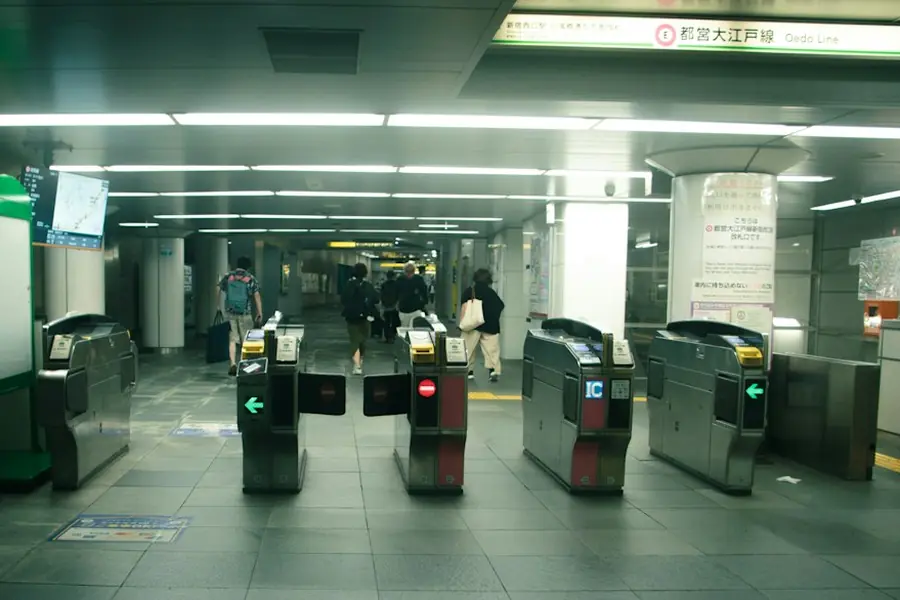
IC cards such as Suica, PASMO and ICOCA work on trains and buses and at convenience stores and vending machines, which keeps coins from piling up. Tourist versions and smartphone wallet options exist; check current availability before you travel. Many top-up machines accept cash only.
Coins are hard to exchange back at home, so spend them at convenience stores or on card top-ups before you leave.
Frequently asked questions
Will I be offered DCC in Japan?
Some duty-free shops, tourist stores and ATMs may offer to charge you in your home currency. Always choose yen (JPY).